Bujinkan logo

Taijutsu Self Defense

Fairfax Bujinkan Dojo: Martial Arts of Budo Taijutsu and Ninjutsu

HOME | PHILOSOPHY | RECENT ACTIVITY | PICTURES | INSTRUCTORS | CONTACT US | LINKS

Welcome to our homepage! The Fairfax Bujinkan Dojo is committed to transmitting the authentic art of the BUJINKAN DOJO, as well as applying the lessons for everyday living. Our training in Fairfax, Virginia is an authorized branch of the international Bujinkan Dojo based out of Noda, Japan headed by Grandmaster Masaaki Hatsumi.

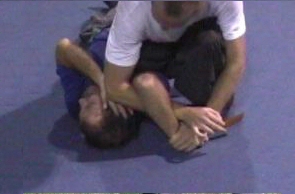
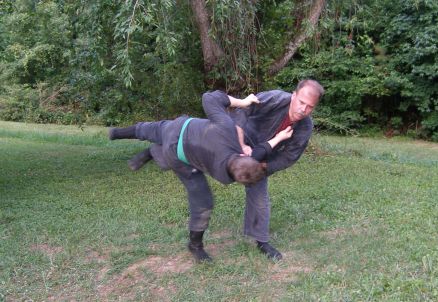
arm lock image

Bujinkan BUDO TAIJUTSU is a comprehensive and effective martial arts system that was developed from battlefield experiences and handed down for nearly 1000 years. At the heart of our training is the ability to adapt moment by moment with body, mind and spirit integrated together to suit any situation. This adaptive approach gives us greater opportunity for success in protecting ourselves and those we care about.

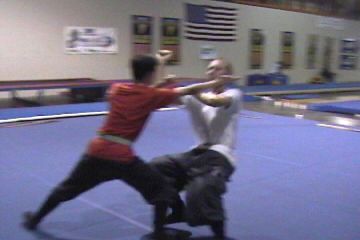
submission photo

Our CURRICULUM covers a broad range of training including:

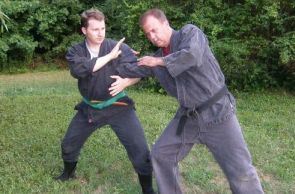
  • Dakentaijutsu - STRIKING methods using almost every part of your body,
  • Jujutsu/Jutaijutsu - GRAPPLING methods from various positions including joint locks, throws, chokes, restraints and counters to the above,
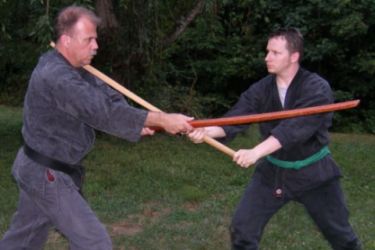
  • WEAPONS training including sword, stick/staff, knife, rope, chain etc, and
  • MODERN APPLICATIONS such as defense against a knife attack, gun retention and disarms, and how to use ordinary items for protection.

SAFETY is a primary focus for us. We begin with slow movement to understand the dynamics, and then as knowledge and skill grows speed and power can be adjusted with less risk.

CLASSES focus on developing sound basics, learning traditional techniques and lessons, and being able to apply them to modern situations.

We meet in a studio room at Kamp Pendleton in Parkridge building 5
10780 Parkridge Blvd Suite #25,
Reston, VA 20191

Tuesdays: 7pm, email me for current training information, there may be other classes during the week as well

FREE Introductory class

CONTACT US

- - - - - - - - - - - - - - - - - - - - - - - - - -


We return to Japan on a frequent basis to keep current with Soke 'Grandmaster' Hatsumi and continue our martial arts education with the Shitennou or top instructors of the art:

- - - - - Reflections on my latest trips to Japan - - - - -

Japan trip January 2012 reflections

Shinryuyogo - Divine Dragon Protecting the Essence

Theme
I was in Japan for two weeks, including the start of classes again this year - year of the dragon. Hatsumi Sensei wrote the kanji shin-ryu-yo-go for 2012, which is literally ‘Divine Dragon Protect Essence.’ He was talking about finding or understanding the central point – the kaname. This would be like the pin that holds the blades and supporting pieces together in a rotating fan.

Senses and Kukan
Hatsumi Sensei was talking about dropping out or disappearing from the opponents' perception to manipulate them. He was also jumping from point to point – Tobi Hasso. You must know the kukan or rather the shape of the space to control the points for what’s next. Hatsumi Sensei knows this based on the current situation and the openings that he is feeding the training partner. For instance, bring your arms low so they may attack high, then point at the opponents shoulder to intercept the punch. Thus he is able to prepare and is already there as the opponent moves.

Environment
Don’t just stop at controlling the opponent through techniques. Anyone can do this. Hatsumi Sensei told us the story of an early meeting with his teacher Takamatsu Sensei, who manipulated the situation such that the young Hatsumi couldn't even stand up without Takamatsu even touching him. You must be aware and control the environment and how events develop. This reminds me of what Stephen Hayes would talk about – becoming an active part of the scheme of totality.

Mushin – No mind, no conscious thought
Nagato Sensei was talking about the importance of not thinking. As more skills become automatic you need to think less about doing them. It interferes with their success. After doing the opening Nagato Sensei shows, you must respond to what happens actually happens. As your skill level rises you are hopefully becoming closer to the kami or God or the gods or whatever it is that you believe in. Hatsumi Sensei doesn’t want the Bujinkan to be a religion or philosophy since people have killed each other over these.

Study
In the beginning and throughout your training, you do need to study your teacher and yourself. The majority of your training will always be self-study. I don’t think anyone can become a master without this. Understanding how things work in general allows you not to have to keep track of thousands of techniques. You just use your knowledge of the structure developed from your study. For instance, work through all the possible placement positions on a hand so that you know how to take control without needing techniques.

Be your own teacher – no power
Duncan mentioned the importance and difficulty of being your own teacher. Awareness becomes paramount as you nurture yourself as a martial artist. He echoed what I have heard before: If you find yourself using power or feel resistance doing the basic technique on a person in comparison to the air, find out what you’re doing wrong and fix it. Again, study.

Basics and Taijutsu
One reason to always practice basics is to keep orientation of our body, as it is constantly changing and growing. This is like constantly calibrating scales in music. If you play with your instrument out of tune you will make horrible music. Beyond keeping our budo engine running well, the basics are the core of taijutsu, and taijutsu the core of the other arts. Hatsumi Sensei was talking about how Takamatsu mostly did Taijutsu, and when he did sword it was with the feeling of muto dori – ‘unarmed against sword.’ Just place the sword on the body and use Taijutsu to let the sword cut naturally without trying.

Oguri Shihan
A shadow was cast on this trip as Oguri Shihan passed away after a struggle with cancer and chemotherapy. He may have been the greatest Bujinkan practitioner, with the way he seemed to defy the laws of reality and crush down opponents without power. It was as if he created a little black hole in your body and it was crushing you downward. You were wrapped up and compressed onto the base of your spine and held as your legs were shaking from the stress of the situation while he was hitting you with your own arms. I’ll treasure the little time I got to be inspired by him, and his sincerity, humor, and kindness will be missed.

Training in Japan with Oguri Shihan

Japan trip 2011 reflections - Kihon Happo

I was in Japan this year at Grandmaster Hatsumi’s Hatsu Geiko ‘first training’ of 2011 among about 45 students. The theme of the year is Kihon Happo or 'Fundamental Eight (all) Ways.’ Hatsumi Sensei didn’t use the standard kanji to write ‘Kihon Happo,’ but instead he created the sounds with other characters which give the term alternate meanings for our investigation. Nagato Sensei was using a kanji calculator in his class to explore the possible meanings it may have for us. The training began with Noguchi Sensei demonstrating the three striking techniques. Hatsumi Sensei then brought the techniques to life to inspire our training, including ideas such as the shuto in Ichimonji as kyojitsu (‘deception’) and freely using the kick/leg to move around our training partner in hicho.

Hatsumi Sensei talked about many important points, including controlling the space between you and your opponent, not predetermining the next moment, and showing various kyusho (‘vital points’) all around the eye, ear, and face.

He mentioned this year we may be studying points of the ryu-ha (‘family styles’) of the Bujinkan during different periods. We did some quick-drawing with a Shinden Fudo Ryu sword. It was a smaller, shorter, thinner blade, giving you a tool to defeat even a modern Iaido master. I remember Mark O'Brien teaching that the SFR sword was bigger and heavier, using a guarding circular motion, back in the '90s. I guess SFR may have had different styles of swords.

Hatsumi Sensei said he's teaching what you cannot remember, so move slow to learn. He reminded us to keep the ferociousness of wild animals in mind. Practice changing grips. We also added weapons. He's looking good wrapping his opponent up like chopsticks with a bo and sword at 79 years old.

During my two-week stay, I attended one of Pete Reynolds’s classes. He explained a lot of important points as he sees (and I remember) them:
‘Understanding the basics is about exploring down to the smallest pieces to truly understand them, like with material objects down to molecules, to atoms, to subatomic particles, etc. First, you must have a mobile, strong posture so that you are safe against all the forces around you. Do not have a feeling of fighting because you must be aware of everything. An aspect of kyojitsu here is that you appear and are capable of fighting, but you don't - which may create a kind of vacuum as you continue taking away what the opponent(s) have. This is like an artist taking away rock to reveal the statue inside. Move to a position where the attacker doesn't have any power or structure. Maintain an equal and continuous pressure everywhere so you feel the opponent’s actions and are able to respond instantly. As soon as the attacker counts on something or makes a decision, you take that away from them. You are helping expedite their understanding of karma. The attacker goes from aggressive to defensive. As everything goes wrong for them, and especially with Hatsumi Sensei’s training partners, they freeze to prevent more pain. This is the best solution; the opponent just wants to stop fighting you altogether.’

Japan trip 2010 reflections - Rokkon Shoujou and Tachi

I was able to make it to Japan for 2 weeks this year in May/June and the weather was overcast and great for this time of year. Also there were so few people here at this time Noguchi Sensei pulled out the Bo and we were swinging those around at the Hombu.

The theme of Rokkon Shoujou was inspired by the Buddhist idea of purification of the six senses. Hatsumi changed the Kanji to give us 'Purification through Laughter' For our training this can be cutting away things not necessary to making a technique work such as extraneous tension in different parts of the body. This is a continuation from last year - the idea that we built our capacity leads to cutting away the unnecessary parts (like our own bad habits) and getting to the essence.

Hatsumi Sensei was doing some seated techniques and was showing up everyone with his amazing flexibility he has even when he is close to 80 now. He stressed that we need to have the ability/flexibility/capacity to do what others cannot and won’t expect. I'm continually reminded how important the stretching and joint mobility is and to be able to keep moving and training all your life. Hatsumi Sensei is also able to use his body mobility to create kyojutsu 'misdirection/confusion' - using a piece of the body independently from the whole.

Hatsumi Sensei was talking about how people decide what they are doing too early in the technique. Don't try to do something before you're really at the point… pay attention to what you are doing as you go, don't get ahead of yourself. This reminds me of an old Karate Kid movie – if not getting ahead of yourself in a technique is rule 1, rule 2 is first learn rule 1.

We heard about a hostage situation Grant from South Africa had been involved in. The statistics are that you will be involved in some kind of crime within 3 years of living in South Africa. He arrived home with part of his family while the other part had already been taken hostage in their house. He didn't have a choice but to go in. When the gang of criminals didn't find enough valuables they started punching and kicking Grant in a circle. He used his ukemi 'receiving' to avoid most of the damage they delivered onto him. They took him into the bathroom and he knew they were going to kill him. Instead of begging for his or his family's life which would give them ideas - this also would be the Taijutsu equivalent of directly resisting the opponent, he got them looking for ‘keys’ - this was the mental equivalent of going 90 degrees to the force of attack to redirect the opponents' energy elsewhere. They were all looking for his keys and from this he gave them some credit cards with fake pins. He avoided them taking his car by telling them it had GPS tracking on it, which it didn't. His strategy, kyojutsu/misdirection, and ukemi/receiving strikes ability helped mitigate the situation and save his family's and his own life.

Japan trip 2009 reflections -Saino Kon Ki and Rope / Connection

I was in Japan September of 2009. The Saino Kon Ki theme translates as Ability, Soul, Capacity. Kokoro 'Heart' was originally used, but Hatsumi decided to use Tamashii 'Soul' since it is unchangeable and more consistent than the heart. The general idea seemed to be about growing your capacity in Budo. A plant can only grow as big as the container it's planted in, thus we want to look at making our container bigger.

Another training idea at this time was rope and connection. The idea of connection could mean between you and the training partner, or your teacher. An example for training of how you can use the connection is to pulse to manipulate the opponent's nervous system and to control the opponent's body and space between you.

The Shitennou can also be considered a connection between us and Hatsumi Sensei. Training with them may help us understand him and see things within what he is doing we may otherwise not see. Ohashi-san quoted Hatsumi Sensei saying "When you are in Japan, please attend as many classes by Nagato / Noguchi / Oguri / Senou Shihan as you can. Not a very good idea to study under only one of them, because each has different characteristics. The more, the better. If you train only with me, you won't understand this Budo."

Japan trip 2007 reflections - Kuki Taisho

The 2007 theme - Kuki Taisho 'Playing like a demon' revolved around using Kuki Shin Ryu '9 demon gods school' to think in unconventional ways. This is an unorthodox example Hatsumi Sensei gave along these lines: You notice an attacker about to jump your friend. So you quickly kick your friend into the attacker possibly saving their life and giving you the surprise in the situation once again.

Think of the scrolls of the various schools as being written by demons. You can not trust them, only someone with the proper training can see value through the deception. Even if someone with the ability to read archaic Japanese steals them they will be of little value to them.

Hatsumi Sensei was more upset than I have ever seen him one Friday night because too many people weren't punching for real. He talked about putting the weapon out first and then moving in with body/kamae. As you get closer to the opponent you can finish the strike which will be more effective in close, per his teacher. As you move in you are controlling the space. It may be silly to begin in a fighting posture; you move into the posture as you strike.

Breaking the Kuzushi 'balance' physically or mentally is a fundamental part of techniques. In some situations it may be more accurate to say ‘breaking the Kamae 'structure' which leads to the balance loss’. We must break the head, shoulder, hip, and feet alignment so the opponent has reduced stability and power. Omote Gyaku, Oni Kudaki, Musha Dori break the structure to the rear of the opponent. Ura Gyaku, Ganseki Nage, Muso Dori break the structure to the front.

Shinnenjutsu – 'tricking the opponent through controlling their perceptions'. Beyond the technique level of training, you must be able to attack the opponent at their unconscious level of movement, such as when they instinctively begin to prepare for Ukemi 'receiving/rolling'. Also you can manipulate the visual perception of humans as we see motion, shape and then color in that order by leaving the top profile flat and relatively in place using lack of depth perception to distort the distance change.

Anyone who seriously practices this art should make trips to Japan as much as they can, because the teaching there is so undiluted. The further you move from the center of the circle the less concentrated the knowledge is. My thanks to Rob Renner and Shawn Gray for helping me out with my trip this year!

HOME | PHILOSOPHY | RECENT ACTIVITY | PICTURES | INSTRUCTORS | CONTACT US | LINKS

http://www.winjutsu.com | http://www.livingvalues.com | http://www.bujinkan.com